Language
  English
 Español
Proper installation and regular maintenance significantly extend the service life of a single lever kitchen mixer tap. Many common issues—drips, reduced flow, stiff operation—can be prevented or resolved with appropriate practices.
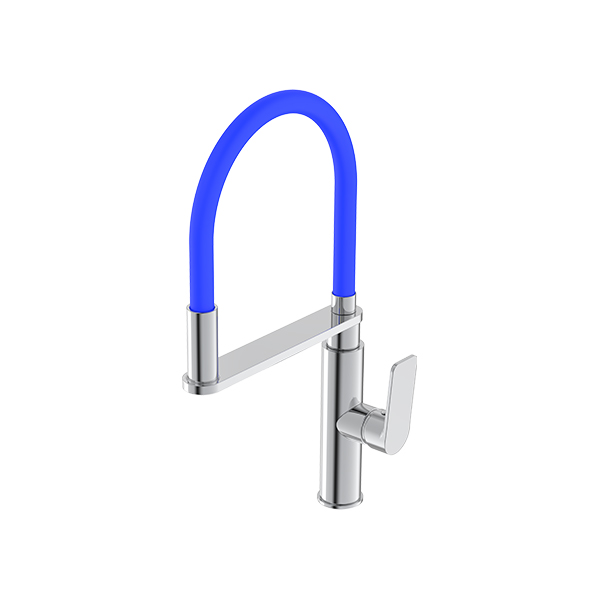
Pre-installation requirements
- Flush supply lines: Before connecting the tap, run water through the supply lines into a bucket for 30 to 60 seconds to remove debris, solder flux, and Teflon tape fragments that can lodge in the cartridge. New plumbing installations or recent repairs introduce the risk of debris.
- Check water pressure: Recommended operating pressure for kitchen mixer taps is 0.5 to 5.0 bar (7 to 70 psi). Pressures above 5.0 bar may damage cartridges and cause premature seal failure. Pressure-reducing valves should be installed if mains pressure exceeds manufacturer specifications.
- Verify connection compatibility: Supply lines typically use ⅜-inch compression fittings (US) or ½-inch BSP (UK, Europe). Adapters may be required for older plumbing configurations. Flexible supply hoses (typically 400–600 mm) should not be stretched or kinked.
Installation practices
Proper sealing: For taps installed through countertops, a silicone seal between the tap base and the counter surface prevents water seepage that can damage cabinetry. Over-tightening the mounting nut can crack ceramic or stone countertops; compression should be sufficient to prevent movement without excessive force.
Hose routing: For pull-out taps, the hose and weight must be positioned to allow full extension without kinking or contacting the sink basin edges. The weight should be adjusted so the hose retracts fully when released without slamming the spray head into the dock.
Leak testing: After installation, open supply valves slowly and check all connections for leaks. Run both hot and cold water for 2 to 3 minutes to purge air and verify temperature mixing. Test the spout swivel through full range to ensure hoses are not binding.
Maintenance practices
Aerator cleaning: The aerator at the spout outlet accumulates mineral deposits and debris, causing reduced flow and irregular spray patterns. Cleaning involves unscrewing the aerator (hand-tight only; tools may damage finish), disassembling the mesh screens, soaking in white vinegar for 30 to 60 minutes to dissolve deposits, and reassembling. Frequency depends on water hardness; every 6 to 12 months is typical.
Cartridge lubrication: Ceramic cartridges are pre-lubricated with silicone grease at manufacture. If lever operation becomes stiff, the cartridge can be removed and the ceramic discs lightly lubricated with silicone grease (petroleum-based lubricants damage seals). Stiffness often results from mineral deposits rather than lubrication failure; soaking the cartridge in vinegar may resolve.
Seal inspection: O-rings and seals in the spout base and connection points should be inspected annually for cracks or flattening. Deteriorated seals allow leaks at the tap base (visible water on countertop) or reduced performance. Replacement seal kits are available from manufacturers.
Pull-out hose care: The retractable hose should be fully extended and retracted periodically to maintain flexibility. Hose kinks should be straightened immediately. The spray head diverter (switches between stream and spray) should be cycled periodically to prevent mineral buildup.
|
Issue |
Likely Cause |
Solution |
|
Dripping from spout |
Worn ceramic disc or debris in cartridge |
Clean or replace cartridge |
|
Reduced flow |
Clogged aerator or debris in cartridge |
Clean aerator; flush cartridge |
|
Stiff lever operation |
Mineral deposits or debris |
Clean cartridge; replace if damaged |
|
Leak at tap base |
Worn O-ring or loose mounting |
Replace O-ring; tighten mounting nut |
|
Hose does not retract |
Weight position incorrect or hose binding |
Adjust weight; check hose routing |
|
Spray head stuck |
Mineral deposits in diverter |
Clean diverter with vinegar solution |
|
Water hammer (noise) |
Loose supply lines or high pressure |
Secure lines; install water hammer arrestor |
What material and finish options are available, and how do they affect durability and maintenance?
The materials and finishes used in single lever kitchen mixer taps affect not only appearance but also resistance to corrosion, scratching, and chemical damage. Understanding these characteristics helps consumers select finishes appropriate for their kitchen environment and maintenance preferences.
Base material options
Solid brass (CW617N, CW602N): The traditional standard for quality taps. Brass provides corrosion resistance, strength, and machinability. Lead content in modern brass alloys is reduced to 0.25–1.5 percent, complying with low-lead regulations (NSF/ANSI 61, AB1953). Brass taps are heavy, indicating substantial metal content. Suitable for all kitchen environments.
Stainless steel (304, 316): Increasingly popular for contemporary kitchens. 304 stainless steel (18/8) provides good corrosion resistance. 316 stainless steel (18/10 with molybdenum) offers enhanced resistance to chlorides for coastal areas. Stainless steel taps are lightweight, contain no lead, and resist fingerprint marks. Surface scratches can be buffed out with non-abrasive pads.
Zinc alloy (Zamak): Used in lower-cost taps, often for decorative components. Zamak can be cast into complex shapes but is less durable than brass. Prolonged exposure to moisture can cause corrosion (white powdery residue). Not recommended for areas with hard water or high humidity.