Language
  English
 Español
Single lever basin mixer taps are classified by their mounting configuration, spout design, and handle operation. Each type is suited to different basin styles, installation requirements, and user preferences.
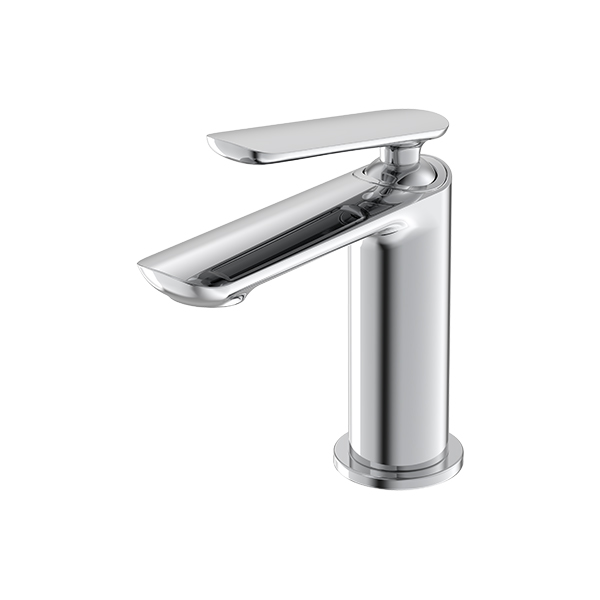
Deck-Mounted Mixer: The common type. Installed through holes drilled into the basin or countertop. Typically requires three holes—one for the tap body and two for handles—though single-lever versions use one central hole. Spout extends forward over the basin. Suitable for bathroom and kitchen basins.
Single-Hole Mixer: Designed for basins with a single pre-drilled hole. Combines the tap body, spout, and lever mechanism into a single unit that mounts through one hole. Compact design saves counter space. Common in contemporary bathroom designs and smaller basins.
Wall-Mounted Mixer: Installed on the wall above the basin rather than on the basin itself. Spout projects from the wall. Allows for easy cleaning of the basin surface. Requires plumbing rough-in during construction or renovation. Common in modern and minimalist bathroom designs.
Pull-Out or Pull-Down Mixer: Features a spout with a retractable hose. Pull-out models extend the spray head forward; pull-down models extend downward. Allows targeted water delivery for rinsing or cleaning. More common in kitchen applications but increasingly available for bathroom basins.
Thermostatic Mixer: Includes a Thermostatic cartridge that maintains a consistent outlet temperature regardless of pressure fluctuations. Single lever typically controls flow and on/off, with a separate temperature setting dial. Used in applications where temperature stability is critical.
Material Characteristics of Single Lever Basin Mixer Taps
Brass (Base Material): The predominant material for tap bodies. Typically CW617N or CW602N (EN 12165/12164 standards). Composition: 57–63 percent copper, 35–40 percent zinc, 1.5–3.5 percent lead for machinability. Dezincification-resistant (DZR) brass (with arsenic addition) is specified for areas with aggressive water chemistry. Brass provides corrosion resistance, strength, and machinability.
Stainless Steel (304/316): Used for tap bodies in contemporary designs. 304 stainless steel (18/8) offers good corrosion resistance. 316 stainless steel (18/10 with molybdenum) provides enhanced resistance to chlorides for coastal or industrial environments. Stainless steel taps are lightweight, durable, and suitable for applications where lead content is a concern.
Zinc Alloy: Used for lower-cost taps or for decorative components such as levers and escutcheons. Zamak (zinc, aluminum, magnesium, copper) is cast into complex shapes. Lower strength and corrosion resistance than brass. Not suitable for structural components under pressure.
Ceramic Disc Cartridge: The core component controlling flow and temperature. Made from aluminum oxide (alumina) with a hardness of 8–9 on the Mohs scale. Two ceramic discs with precision-lapped surfaces (flatness within 0.001 millimeters) seal against each other. Provides smooth operation, precise flow control, and extended service life (500,000 to 1,000,000 cycles typical). Resistant to wear and mineral buildup.
Chrome Plating: Applied to brass or zinc substrates. Electroplated layers: copper (10–15 microns), nickel (10–20 microns), chromium (0.2–0.5 microns). Provides corrosion resistance, hardness (800–1,000 HV), and reflective finish. Chrome plating thickness affects durability; thicker nickel layers improve corrosion resistance.
PVD Coating: Physical vapor deposition applied over base plating. Creates colored finishes, including brushed nickel, bronze, matte black, and gold. PVD coatings are harder (2,000–3,000 HV) than chrome and are more resistant to scratching and chemical corrosion. Thickness typically 0.5–2.0 microns.
Powder Coating: Applied to some stainless steel and brass taps. Thicker coating (50–150 microns) provides durable, matte finishes. More resistant to fingerprint marks than polished chrome. Susceptible to chipping if impacted.
Manufacturing Processes for Single Lever Basin Mixer Taps
Casting. Brass taps begin as ingots melted in furnaces. Low-pressure die casting or gravity casting forms the tap body. Casting produces near-net shapes requiring minimal machining. Stainless steel taps are investment cast or fabricated from tube and sheet.
Machining. Cast bodies are machined on CNC lathes and machining centers. Holes are drilled and threaded for connections. Valve seats are precision-cut to accept cartridges. Tolerances are maintained within 0.05 to 0.10 millimeters.
Polishing. Raw castings have rough surfaces. Polishing wheels with abrasive compounds creates smooth surfaces. Multiple grit stages progress from coarse to fine. Polishing prepares surfaces for plating and removes casting imperfections.
Plating. Polished components undergo electroplating. The copper layer provides adhesion and leveling. Nickel layer provides corrosion resistance. Chrome layer provides hardness and appearance. Plating thickness is measured using X-ray fluorescence testing.
Cartridge assembly. Ceramic discs are precision-ground and matched. Discs are installed in brass or plastic housings with seals. Cartridges are tested for flow rate, temperature accuracy, and leak resistance before installation.
Assembly. The cartridge is inserted into the tap body and secured. The lever mechanism is attached to the cartridge stem. The spout is assembled with the aerator and seals. Connection hoses (flexible or rigid) are attached.
Testing. Each tap is pressure-tested with air or water. Typical test pressure is 10 to 16 bar (150 to 230 psi) for 30 to 60 seconds. Flow rate and temperature mixing are verified. Visual inspection confirms finish quality and labeling.
Packaging. Taps are wrapped to protect plated surfaces. Installation hardware (fixing nuts, washers, and connection hoses) is included. Instruction manuals and warranty documents are packaged. Boxes are designed for retail display or bulk shipping.